For most government agencies, accepting in-person payments has always involved a certain amount of friction. Long lines, overextended staff, end-of-day reconciliation, and the ever-present risk of cash handling errors. It’s simply the cost of doing business, or so the thinking goes.
The reality is that traditional payment workflows carry a far greater operational and financial burden than most agencies account for. And in an era where the public expects faster, more accessible services, the gap between what manual processes can deliver and what citizens need continues to grow.
This is the case for modernizing in-person bill payment, and why a managed, self-service payment environment is no longer a luxury. It’s an operational necessity.
The Problem: Traditional Payment Workflows Create Operational Strain
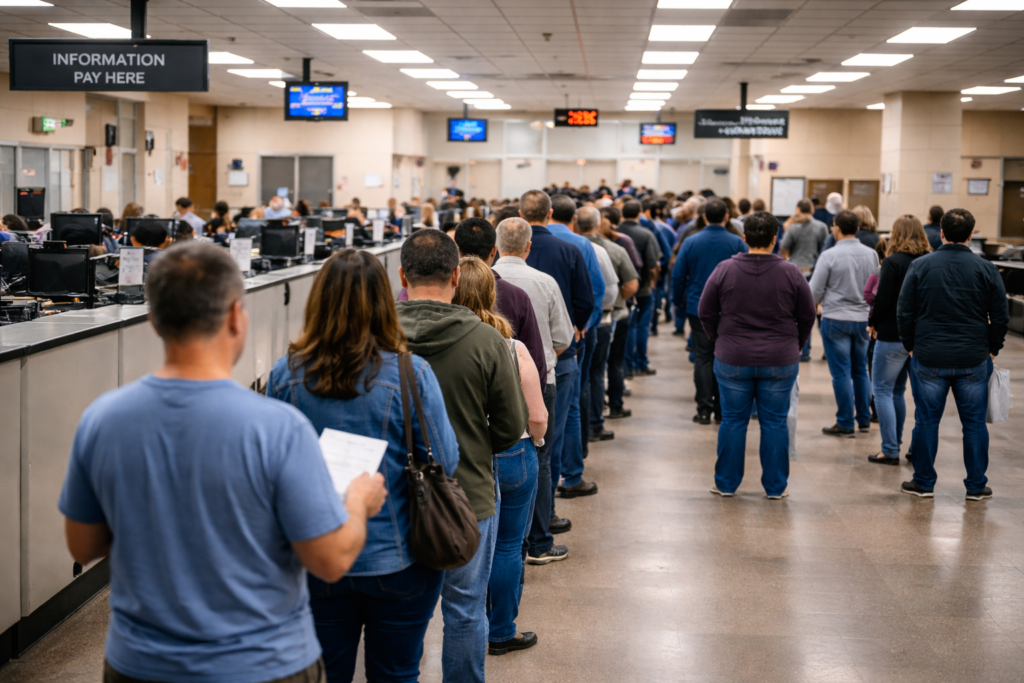
Envision a municipal utility office on the first of the month. The lobby fills up fast. A single payment window is staffed by two clerks handling cash, checks, and card transactions one at a time: answering questions, printing receipts, resolving discrepancies. By mid-morning, the line is out the door and wait times have stretched past 30 minutes.
This isn’t an edge case. It’s a daily reality for municipal offices, courthouses and housing agencies across the country. In-person payment processing is labor-intensive by design, and the downstream effects compound quickly:
- Peak-hour congestion creates a poor public experience and increases the likelihood of staff errors under pressure.
- Staff assigned to payment processing are pulled away from higher-value administrative work.
- Service hours are limited to when staff are available, leaving residents with inflexible access windows that don’t accommodate everyone’s schedule.
Going Digital-Only Isn’t the Answer
Online payment portals have made a real difference for many agencies, but they don’t solve the whole problem. A significant portion of the population, particularly older residents, unbanked individuals, and those without reliable internet access, simply cannot or will not pay online. This is the digitally invisible population, and government agencies have a civic obligation to serve them.
Cash payment, in particular, is not optional for many residents. Removing or degrading in-person payment access doesn’t make the problem go away. It shifts the burden back onto the very people agencies are meant to serve, while creating a service gap that puts agencies out of compliance with accessibility expectations.
Financial Control Gaps Are Hiding in Plain Sight
Beyond the operational friction, manual payment workflows introduce serious financial control risks that often go unaddressed until an audit surfaces them:
- Reconciliation is typically performed once at end-of-day, based on manually entered records. It’s a process that’s slow, error-prone, and difficult to validate retroactively.
- Human error in cash counting, change dispensing, and receipt generation creates discrepancies that consume additional staff time to resolve.
- Audit preparation becomes an extensive, time-consuming exercise when transaction records are incomplete, disconnected, or manually compiled.
The System: Why a Managed Payment Environment Changes the Equation
The answer isn’t to hire more staff or extend service hours. It’s to deploy a payment environment where hardware, software, reporting, and financial controls operate as an integrated system, one that handles the transactional workload automatically and gives administrators full oversight without manual intervention.
A Platform, Not Just a Terminal
A managed self-service payment system functions as a closed-loop transaction environment. Every payment, regardless of method, follows a validated, guided workflow that eliminates incomplete transactions and reduces user error. The payment hardware, the software interface, the transaction logging, and the backend reporting all work in concert:
- Closed-loop transaction validation ensures every payment is verified, recorded, and tied to the correct account in real time.
- Automated reconciliation workflows replace end-of-day manual processes with continuous, accurate financial records.
- Integration with existing billing, ERP, and finance systems means the kiosk fits into your current infrastructure, not the other way around.

More Operational Oversight with Less Manual Intervention
The right managed payment environment doesn’t just process transactions. It provides the operational visibility administrators need to stay in control at all times:
- Real-time reporting dashboards surface transaction data, account activity, and system status as it happens.
- Centralized configuration and monitoring allow administrators to manage settings, access levels, and updates across multiple locations from a single console.
- Audit-ready transaction logs are automatically generated and maintained, dramatically reducing the effort required for compliance reporting.
Secure, Unattended Operation That Doesn’t Compromise Accountability
Unattended doesn’t mean unaccountable. A purpose-built payment system incorporates multiple layers of physical and digital security:
- Hardened enclosures, dual-lock cash vault architecture, and tamper-resistant cash path design protect physical assets.
- Operating system lockdown and session control prevent unauthorized access or system misuse.
- ADA-compliant design ensures equitable service access for all citizens, meeting federal accessibility standards without requiring staff assistance.
The Outcomes: What Agencies and Citizens Actually Gain
Operational Relief for Staff and Administrators
- Lobby congestion drops significantly as self-service transactions absorb payment volume without adding to wait times.
- Manual cash handling is reduced substantially, lowering fraud exposure and the time spent on physical cash management.
- Staff time is reallocated from repetitive transaction processing to higher-value administrative work.
Stronger Financial Accountability - Every transaction is verified, documented, and immediately visible in the reporting dashboard, eliminating the lag between payment and record.
- Automated audit preparation replaces a labor-intensive manual process with structured, ready-to-export transaction records.
Expanded, Equitable Service Access for Citizens - 24/7 payment availability removes the constraint of business hours, making it practical for residents to pay on their own schedule.
- Consistent, guided payment workflows are designed around user experience, reducing errors and incomplete transactions regardless of the payer’s technical comfort level.
The Solution: Introducing the Vault Self-Service Payment Kiosk by Advanced Kiosks
The Vault is a fully managed, unattended payment system built specifically for public-facing environments: government agencies, courts, housing authorities, utility offices, and other high-volume public service settings. It doesn’t approximate what these organizations need. It’s engineered for it.
 Enterprise-Grade Hardware That Accepts Every Payment Type
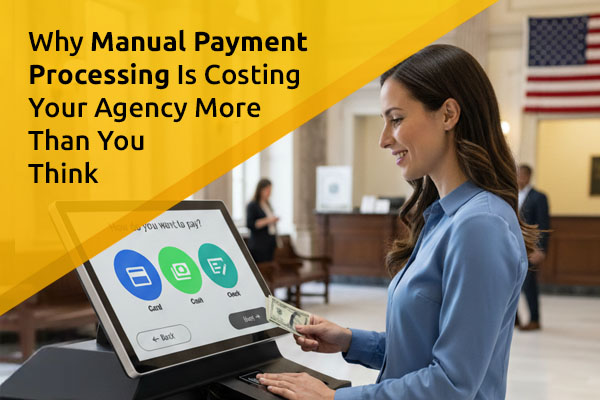
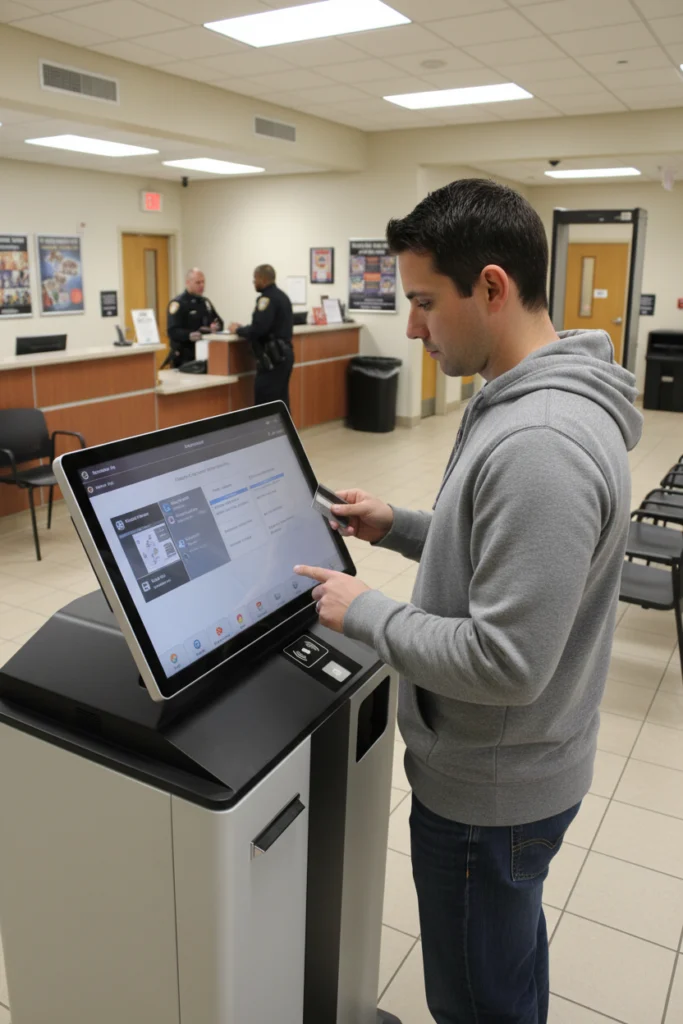
The Vault accepts cash (bulk insertion with change dispensing), credit and debit cards, contactless and mobile wallets including Apple Pay, check scanning, and includes integrated ID, QR, and barcode scanning for accurate account lookup and verification. Every payment type is supported through a single, guided interface designed to minimize user error and abandoned transactions. The system’s segmented steel chassis, dual-lock vault system, and tamper-resistant cash path architecture give administrators confidence that physical assets are protected at every step.
Powered by Zamok: The Engine Behind the Vault
What separates the Vault from a standard payment terminal is the software platform running underneath it. Zamok is Advanced Kiosks’ proprietary self-service management platform, and it’s what transforms the Vault from a payment device into a fully managed payment operations environment:
- Secure OS lockdown and session control prevent unauthorized use and protect the integrity of every transaction.
- Closed-loop transaction control validates every payment from initiation to completion, eliminating incomplete or unverified records.
- Cloud-based monitoring and reporting provide real-time visibility into transaction data, system health, and operational status.
- System-wide visibility across deployments means administrators managing multiple kiosk locations can monitor, configure, and update every unit from a centralized console.
Built for Government Procurement and Compliance
Advanced Kiosks is a GSA Contract Holder, and the Vault is available through GSA cooperative purchasing. This simplifies the procurement process for government agencies navigating acquisition requirements, and ensures the system integrates cleanly with public-sector payment platforms and existing financial reporting structures. The Vault fits within established compliance frameworks, helping agencies modernize payment access without disrupting existing financial controls.
The Vault Is Not Just a Kiosk
The right self-service payment infrastructure does more than process transactions. For government agencies, it functions simultaneously as:
- A highly secure financial control system, with automated validation, PCI-compliant card processing, tamper detection, and audit-ready records.
- A modernization strategy to bridge the digital divide, providing accessible, unattended payment access for every resident, regardless of technical ability or banking status.
- A cost-effective way to automate payments without sacrificing oversight, reducing staff burden and cash risk while increasing operational transparency.
If your agency is managing high in-person payment volume, navigating reconciliation challenges, or looking to expand service access without expanding headcount, the Vault was designed for exactly that environment.
Ready to see how the Vault fits your organization?
Speak with a Payment System Advisor today to walk through your agency’s specific volume, compliance requirements, and integration needs.