

Opioid Response & Recovery Access Platform for Government Agencies
24/7 naloxone distribution, guided intake workflows, justice-involved recovery coordination, and public-facing opioid response infrastructure, designed to align with opioid settlement abatement funding.
More than $54 billion in opioid settlement funds is moving from pharmaceutical manufacturers and distributors into state, county, and municipal abatement programs. Public access naloxone programs, recovery intake systems, justice-involved diversion workflows, and coordinated care infrastructure sit inside the most defensible categories of approved uses under those agreements.
Counties are already deploying. In 2026, Lehigh County, Pennsylvania launched fully settlement-funded 24/7 public health kiosks for naloxone and harm reduction supplies. Louisville, Kentucky used settlement funds to establish an ongoing naloxone kiosk operation for re-entry services and harm reduction. These aren’t pilot programs, they’re active, funded infrastructure.
Advanced Kiosks provides the digital public access infrastructure behind programs like these: guided intake systems, secure naloxone dispensing workflows, justice-involved recovery coordination tools, and the reporting capabilities grant reviewers need to see.
What the Recovery Access Platform Does
This is not a standard kiosk deployment. The Advanced Kiosks Recovery Access Platform is purpose-built for opioid response and public health modernization across four operational areas:
Naloxone & Harm Reduction Access: Secure 24/7 public dispensing with automated logging, chain-of-custody documentation, and usage reporting that supports grant compliance and settlement accountability.
Guided Recovery Intake: Step-by-step digital intake workflows with conditional logic, multilingual support, and accessibility-focused interfaces that reduce paperwork burden and improve completion rates.
Justice-Involved Recovery Coordination: Workflows designed for sheriff departments, drug courts, probation offices, diversion programs, and re-entry coordination, connecting individuals directly to treatment resources, peer support, and behavioral health services.
Coordinated Referrals & Warm Handoffs: Digital referral routing and intake transfer between law enforcement, treatment providers, recovery organizations, and public health agencies, the coordinated care infrastructure explicitly referenced in Exhibit E of the national settlement agreements.
Who This Is For
Law Enforcement: Sheriff departments, police stations, booking areas, and diversion programs. Extends naloxone access and recovery navigation without adding front desk workload. Supports PAARI-model Angel Programs and deflection initiatives that qualify directly under settlement approved-use language.
Courts & Justice Programs: Drug courts, probation offices, re-entry programs, and community supervision. Guides justice-involved individuals through intake, resource navigation, and referral workflows at the point of contact.
Public Health & Behavioral Health: County health departments, outpatient treatment centers, MAT/MOUD providers, and crisis response organizations. Provides public-facing access to treatment resources, appointment coordination, and telehealth connections.
Community Organizations & Recovery Programs: Recovery centers, shelters, nonprofits, and outreach programs deploying mobile or fixed-location access points in underserved or rural areas.
Funding Alignment – Opioid Settlement Approved Uses
| Settlement Priority | Platform Capability |
|---|---|
| Naloxone access & overdose prevention | 24/7 secure dispensing with automated tracking |
| Warm handoffs | Digital referral routing and intake transfer |
| Justice-involved populations | Law enforcement and court intake workflows |
| Recovery support services | Guided navigation and resource access |
| Treatment access | MAT/MOUD referrals and appointment coordination |
| Data collection & reporting | Dashboards, utilization metrics, exportable reports |
| Rural & underserved access | Mobile deployments and remote assistance |
| Cross-agency coordination | Shared intake workflows and referral systems |
| Harm reduction | Public-facing distribution and education interfaces |
Beyond settlement funds, agencies have also successfully funded opioid response infrastructure through the Bureau of Justice Assistance’s Comprehensive Opioid, Stimulant, and Substance Use Program (COSSUP), which supports criminal justice system access to treatment and recovery services.
Why 24/7 Access Changes the Operational Equation
Traditional naloxone distribution and recovery intake depend on staff availability, scheduled outreach events, and business hours. That model limits access and adds workload.
A public access deployment removes those constraints. The system operates continuously in lobbies, municipal buildings, sheriff departments, or community facilities, extending availability beyond duty hours without adding personnel cost. Every interaction is logged automatically. Naloxone dispenses include full chain-of-custody documentation with no officer discretion required in distribution. The same system that supports the program operationally also generates the audit trail and utilization data grant reviewers require.
Once installed, the program runs on a restocking cycle, not a staffing cycle. That operational sustainability is one of the reasons these deployments align so cleanly with settlement funding priorities, they demonstrate measurable, ongoing public impact rather than one-time expenditures.
Data Collection, Reporting & Grant Accountability
Agencies receiving opioid settlement funds are under growing pressure to demonstrate measurable outcomes and maintain transparent operations.
The Recovery Access Platform includes:
- Standardized intake data collection
- Service utilization and dispense tracking
- Reporting dashboards for operational oversight
- Exportable reports for grant compliance submissions
- Trend analysis for program evaluation
- Outcome documentation for future funding applications
This reporting infrastructure directly supports the accountability requirements most state opioid abatement advisory boards and settlement administrators require before renewing or expanding funding awards.
Mobile & Rural Deployment
Many communities with the greatest need face geographic barriers that fixed deployments alone cannot solve.
The platform supports:
- Fixed public lobby installations
- Mobile deployment units for outreach programs
- Tablet-based field systems for first-responder access
- Temporary installations at community events or crisis response centers
- Telehealth and remote assistance integration for specialist access in rural areas
States with active rural access funding priorities, including Arkansas, West Virginia, Kentucky, Tennessee, Oklahoma, and New Hampshire, have specifically named geographic and transportation barriers as qualifying need factors in abatement funding cycles.
States With Active Opioid Abatement Funding Opportunities
Agencies in the following states have active or recently closed funding cycles with direct alignment to public access naloxone and recovery infrastructure:
Arkansas: Active ARORP county-level funding with strong operational project pathways. Tennessee: County and community abatement grants with active competitive cycles. Kentucky: Justice-focused funding with documented law enforcement and drug court awards. Ohio: OneOhio Recovery Foundation funding with criminal justice infrastructure language. West Virginia: Significant local remediation focus with active applications. Oklahoma: Explicit law enforcement and justice system language in board funding priorities. Virginia: Virginia Opioid Abatement Authority grant programs with regional distribution. North Carolina: Mature statewide structure with active local implementation funding. Washington — Regional opioid councils with strong county-level participation. New Hampshire: System modernization, data collection, and coordination priorities.
Louisiana is the only state with a specific direct carve-out to sheriffs, 20% of settlement funds. Louisiana law enforcement agencies have a uniquely direct funding pathway for this type of deployment.
Government Experience
Advanced Kiosks has deep experience deploying public-facing digital access systems in government environments, including law enforcement, courts, county government, and public service agencies. Our systems are built for demanding public-sector environments: secure public interaction, guided intake, workflow automation, service navigation, and operational accountability.
We work directly with agencies on installation planning, operational rollout, and aligning project scope with opioid settlement funding requirements, including sample project narratives for grant applications.

Our Latest Contractor Performance Assessment Reporting System (CPARS) Evaluation:
- QUALITY: Exceptional
- SCHEDULE: Very Good
- COST CONTROL: Very Good
- MANAGEMENT: Exceptional
- SMALL BUSINESS SUBCONTRACTING: Exceptional
Frequently Asked Questions
Q: Can opioid settlement funds be used to purchase naloxone kiosks?
A: Yes. Naloxone access and overdose prevention infrastructure are explicitly listed as approved remediation uses under the National Opioid Settlement Agreements (Exhibit E, Schedule A). Multiple counties, including Lehigh County, PA and Louisville Metro, KY, have used settlement funds to deploy 24/7 public naloxone access kiosks. Law enforcement agencies, public health departments, and community organizations are all eligible applicants in most states.
Q: What opioid settlement uses does a recovery access kiosk qualify for?
A: A public access recovery and naloxone system typically qualifies under multiple Exhibit E categories, including naloxone distribution and overdose prevention, warm handoffs and coordinated care, justice-involved recovery programs, treatment access and navigation, harm reduction, data collection and reporting, and rural and underserved community access.
Q: What funding sources beyond opioid settlements can pay for recovery access kiosks?
A: Agencies have also used the Bureau of Justice Assistance’s COSSUP (Comprehensive Opioid, Stimulant, and Substance Use Program) grants, SAMHSA State Opioid Response (SOR) funding, and local abatement board awards. The strongest applications typically document how the deployment serves multiple approved-use categories simultaneously.
Q: Do law enforcement agencies qualify for opioid settlement technology funding?
A: Yes. Law enforcement and justice-involved populations are named specifically in the approved-use language of the National Settlement Agreements. PAARI-model Angel Programs and deflection/diversion initiatives are cited by name in Exhibit E, Schedule B. Louisiana provides a direct 20% carve-out to sheriffs. Multiple states, including Kentucky, Oklahoma, Ohio, and Arkansas, have documented law enforcement technology awards.
Ready to Plan a Public Access Recovery Program?
Talk with our team about what a naloxone access or recovery intake deployment could look like in your jurisdiction, and how to position it for opioid settlement funding.
📞 (603) 865-1000
✉️ sales@advancedkiosks.com
🔗 advancedkiosks.com/contact/
From Our Blog
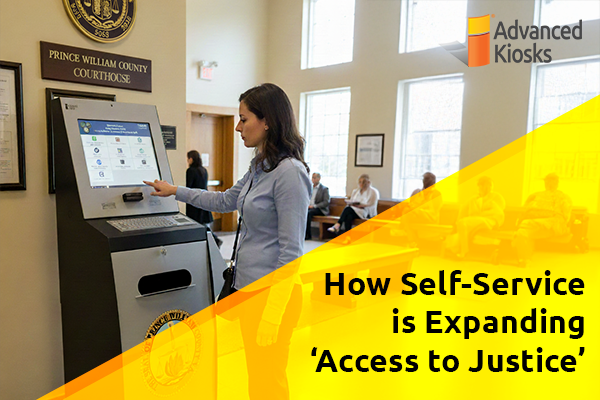
How Self-Service is Expanding ‘Access to Justice’
What is \'Access to Justice\'? Access to Justice is the…

Outdoor Kiosks: Answers to the 10 Most Common Questions
As organizations look to bring services outside the traditional lobby,…
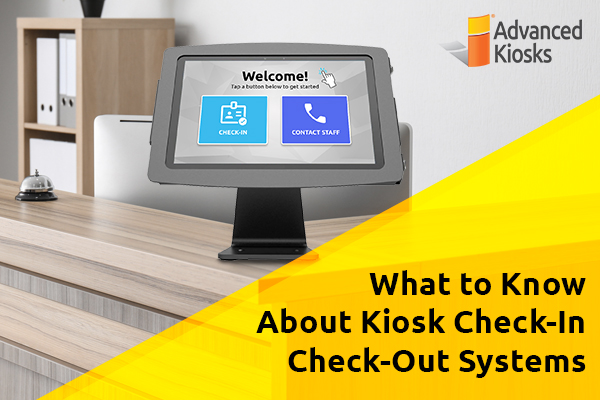
What to Know About Kiosk Check-In/Check-Out Systems
If you\'ve visited a modern government building, healthcare facility or…
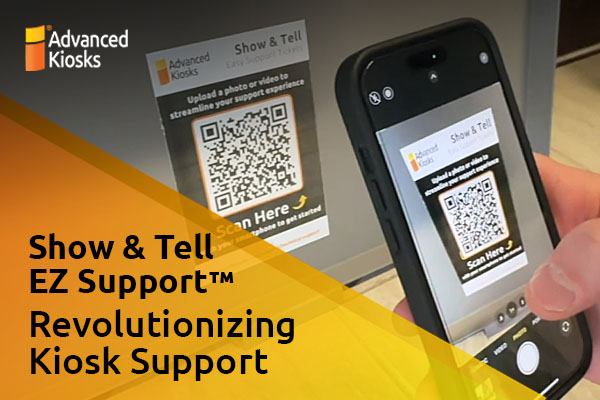
Revolutionizing Kiosk Support with Show & Tell EZ Support
At Advanced Kiosks, innovation is at the heart of everything…

Nine Must-Have Features of a Great Visitor Management System
Your lobby is often the first point of contact for…