


Winter 2026 | Public Service & Self-Service Update
IACP Spotlight Article: Guiding the Community Forward
 A recent spotlight in International Association of Chiefs of Police (IACP) Magazine highlights how one department is rethinking the role of the police lobby.
At the Decatur Police Department, visitors are greeted by a self-service kiosk that guides them through their next steps. Whether submitting a report, requesting records, or contacting dispatch, the process is clear and consistent.
The goal is not to replace staff. It’s to make sure every visitor receives guidance, even when staffing is limited. As Chief Delvon Campbell explained, the department prioritized technology that could support operations while maintaining a strong connection with the commmunity.

More Smart Police Stations on the way!
Recent deployments include:
- ADA County Sheriff’s Office
- Flint Police Department, Michigan
- York Regional Police Department
While these are law enforcement examples, the same model is being applied across courts, municipalities, healthcare systems, and public service environments.
Each implementation is tailored to real workflows, ensuring systems are adopted and used.
Secure payments without staff involvement
Payments are one of the most time-consuming and error-prone processes in public-facing environments.
Manual systems create delays, increase risk, and limit visibility. The Vault Payment Kiosk was built to change that.
With a fully integrated system, agencies can:
- Accept cash, card, and contactless payments
- Eliminate manual handling and reconciliation
- Improve accuracy and accountability
- Monitor transactions in real time
The Vault system uses a bill note recycler (BNR) that does more than just accept cash. Every bill is automatically validated before it is accepted into the system.
Practical AI for Public-Facing Environments

See how Practical AI enhances self-service experiences
AI is becoming part of self-service, but in real-world environments, it needs to be practical. People do not want to navigate complex systems. They want clear answers and direct guidance.
AI-powered kiosks can:
- Guide users through services step by step
- Provide multilingual support
- Answer common questions instantly
- Help users reach the right service faster
Just as important is visibility. Organizations need to understand how AI is performing. AI should not be a black box. It should be something organizations can monitor and refine over time.
NEW Blog Post: Manual Payment Processing

Why manual payment processing is costing more than you think
Manual payment systems often seem manageable on the surface.
But the real cost shows up in daily operations.
Agencies relying on manual processes experience:
- Staff time lost to repetitive payment handling
- Errors that lead to disputes and corrections
- Delays in reconciliation and reporting
- Limited visibility into transaction activity
The bigger issue is not just inefficiency.
It is the lack of insight into what is happening across transactions.
Modern self-service systems provide:
- Automated workflows
- Real-time reporting
- Improved accuracy
- Reduced operational risk
➡ Learn why manual payment processing is costing your agency more than you think
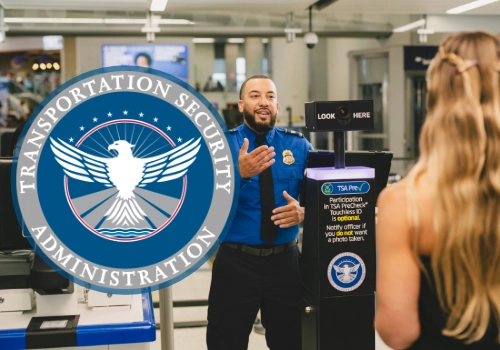
Coming Soon: TSA Deployment Spotlight
Advanced Kiosks continues to expand into high-security federal environments, including upcoming deployments with the Transportation Security Administration (TSA).
These environments demand more than standard technology. Systems must perform reliably under constant use, meet strict security requirements, and deliver a consistent experience for the public.
That is where proven, fully integrated solutions matter.
In federal deployments, agencies are prioritizing systems that:
- Maintain performance in high-traffic environments
- Meet strict security and compliance standards
- Reduce operational friction without adding complexity
- Deliver consistent, predictable user experiences
This reinforces a broader shift across public sector organizations.
When the stakes are high, agencies are not experimenting.
They are choosing systems that are already working in real-world, high-pressure environments.
➡ Trusted by TSA: Advanced Kiosks Deploys Secure Self-Service Systems at 15 International Airports.
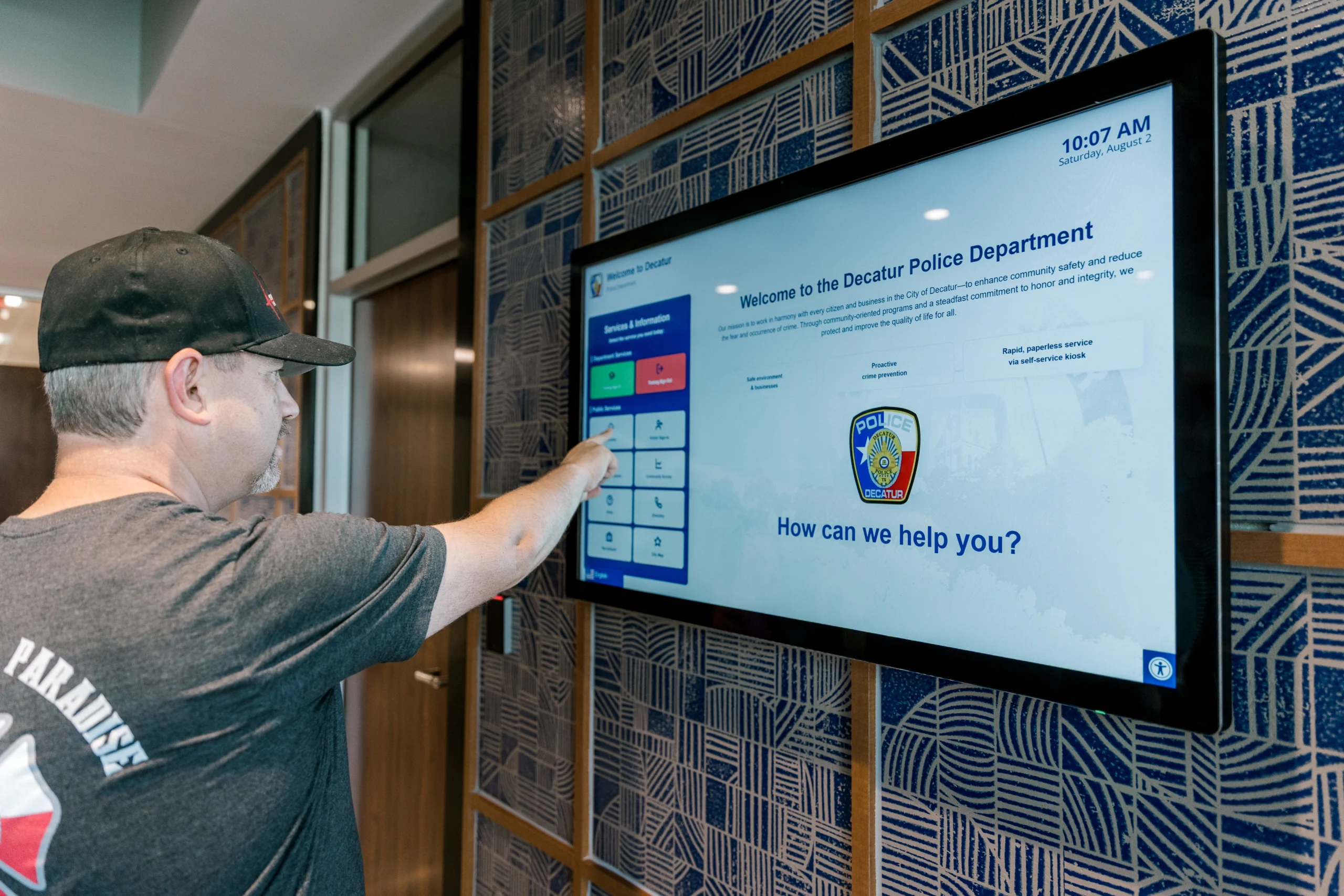
Front Desk are Overwhelmed. Here's what's Changing:
This is not about replacing people.
It is about removing the tasks that do not require them.
With self-service in place:
- Citizens submit documents independently
- Payments are completed without staff involvement
- Forms are guided and completed correctly
- Services are available beyond office hours
The operational impact is immediate:
- Shorter lines in the lobby
- Fewer interruptions for staff
- More time focused on public safety priorities
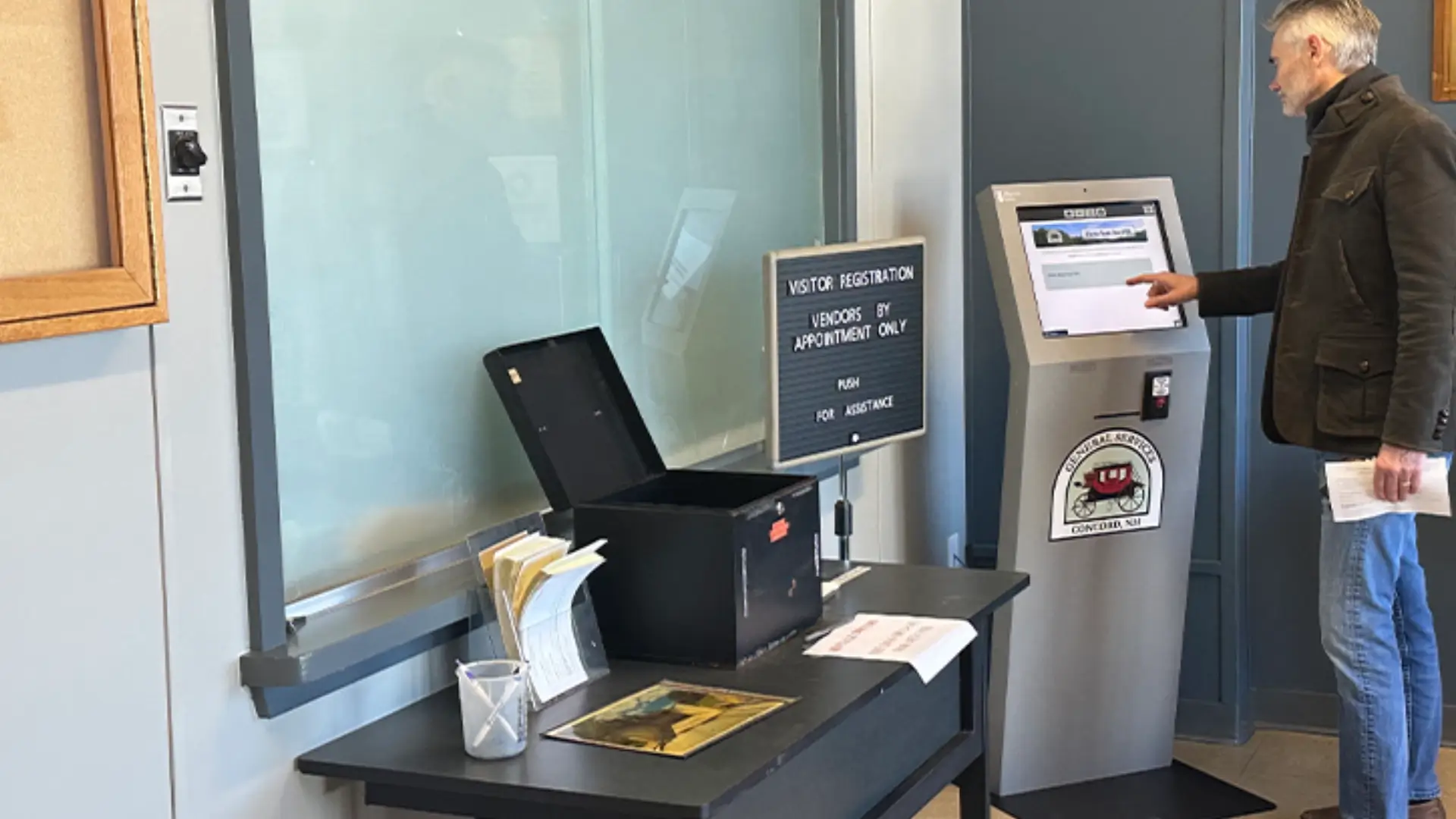
How organizations are already doing this
This is not a future concept. It is already happening.
Organizations using self-service kiosks are seeing:
- Reduced front desk workload
- Improved form accuracy and completion rates
- Extended service access without additional staffing
More importantly, operations become easier to manage.
Instead of reacting to constant interruptions, teams can focus on structured, predictable workflows.
Federal Leadership Sees How Advanced Kiosks Is Transforming Public Access

Advanced Kiosks Welcomes Senator Maggie Hassan to Showcase Government Ready Technology
We appreciate Senator Hassan’s commitment to supporting New Hampshire businesses and her continued focus on innovation that strengthens public service for citizens across the country.
Success Stories: Self-Service in Law Enforcement

How agencies are already doing this
This is not a future concept. It is already happening.
Law enforcement agencies using self-service kiosks are seeing:
- Reduce front desk workload by 40%+
- Improve form accuracy and completion rates
- Provide 24/7 access without staffing costs
More importantly, operations become easier to manage.
Instead of reacting to constant interruptions, teams can focus on structured, predictable workflows.
FROM OUR BLOG
What Every Organization Should Know Before Implementing AI
Artificial intelligence is rapidly moving from experimentation to implementation across…

Read Our Latest 2026 Newsletter!
Our latest newsletter is packed with updates from the field,…
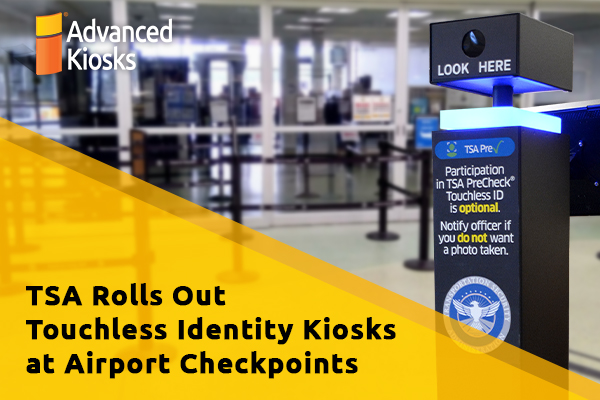
TSA Rolls Out Touchless Identity Kiosks at Airport Checkpoints
Moving millions of passengers safely through airport security requires more…
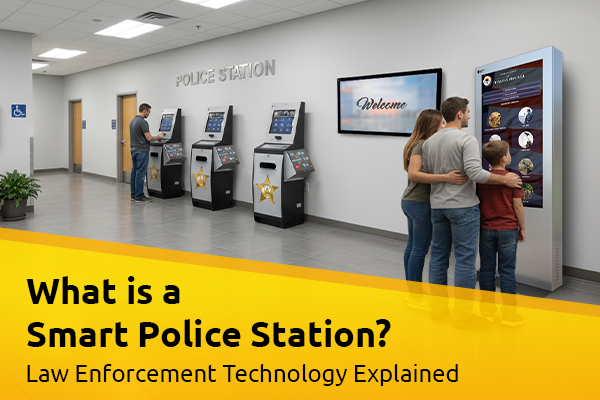
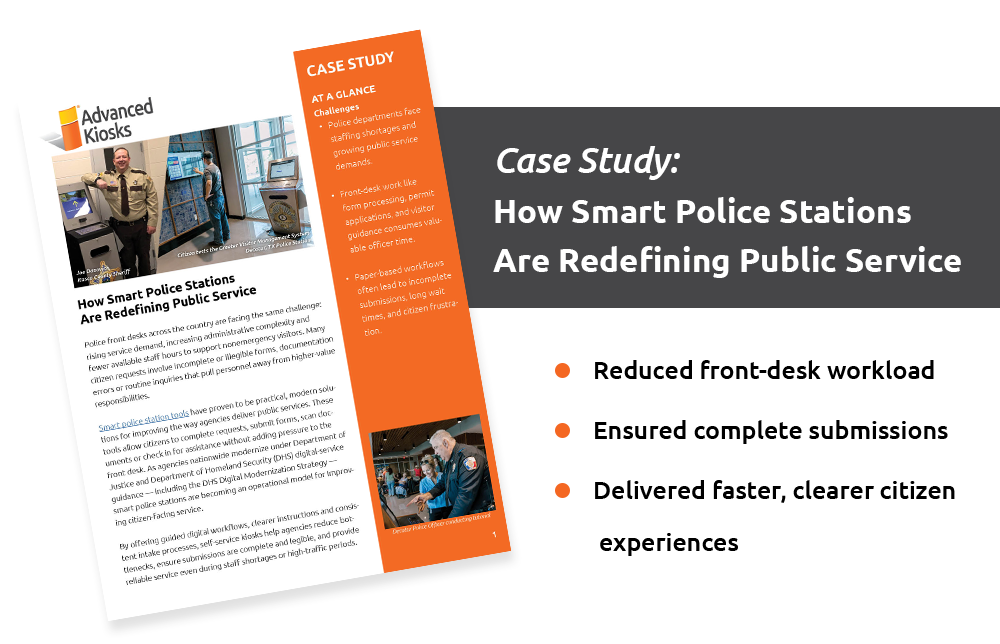
What Is A Smart Police Station? Law Enforcement Technology Explained
Walk-in traffic at police departments hasn’t slowed down. If anything,…
Practical AI Self Service for Public‑Facing Environments
Why AI Self Service Succeeds or Fails in Public Spaces…